BPO Strategy · CX · Africa
The Market Just Called Call Centers “Uninvestable”: What It Really Means for Operators in Africa
Why the recent BPO sell-off marks the end of a cost curve, not the end of the industry, and what 25 years of building operations across Africa reveals about who wins next.
In recent weeks, the market has sent a brutal signal to our BPO industry: large call center operators have been described as uninvestable (thank you, RBC), and several valuations have dropped within days. Fueled by an excessive AI promise to replace human labour, our industry has been facing increased financial pressure as clients cut back on call center spending, with some moving operations offshore to reduce costs. These developments have prompted hedge funds to build significant short positions against call center and business process outsourcing stocks. Concentrix cut its fiscal 2026 outlook by roughly $130 million at the midpoint and dropped 25% in a day, following a 2025 that included a $1.5 billion goodwill impairment on the Webhelp acquisition. A similar dynamic played out with TP, which fell to a multi-year low after last year's mega-acquisition of Majorel and a recent leadership shake-up. TaskUs told investors its quarter came down to the pace of automation at its largest client. TTEC posted a net loss on revenue down 7%.
So when tens of billions of dollars were wiped out in just a few weeks, I did not read it as news. I read it as a verdict I had watched being written for years, and it is worth sharing my thoughts.
Why are call center stocks crashing in 2026?
What the Market Got Right: The High-Volume Seat Model Is Breaking
With all the disturbing news, I want to share a silver lining up front: for mid-market BPOs, CX operators, and platforms with exposure to Africa, this is not the end of the industry. It is the end of a specific cost model, and the beginning of a window for those who know how to operate in the new reality.
In the latest guidance cuts and earnings reports, several large operators show the same pattern: artificial intelligence is absorbing the simplest, most repetitive, and highest-volume work, while their cost structures still depend on selling hundreds of thousands of low-complexity seats.
When your margin depends on massive volumes of cheap transactional work, losing that volume does not just hurt your revenue line; it destroys the economic logic of your operation. Scale, which used to be a competitive advantage, has become a structural exposure.
For years, the dominant model was simple: sell huge capacity to global enterprises, with a direct equation of more geographies, more seats, more revenue. That model worked as long as volume kept growing and nobody questioned where the work should live or under which cost curve.
AI has changed the question. It is no longer about how many seats you can sell, but what kind of human work remains and how you structure it so that it still produces margin, control, and resilience.
Is BPO still a good investment after the selloff?
What the Market Still Misreads: It's Not the End of BPO, It's the End of a Cost Curve
This is where the recent doomsday conversation falls short. This is not the end of the BPO or contact center industry. It is the end of a cost curve built on high-volume, transactional seats placed in the wrong locations.
The work that remains, human judgment, exception handling, regulated interactions, complex operations, still requires trained people, teams, and operational leadership, now more than ever.
In fact, in my own conversations with BPO leaders across Africa and beyond, I keep hearing the same thing: volumes are not disappearing, they are shifting. AI and omnichannel support make it easier for customers to reach out from almost anywhere, modern products keep growing more complex, and human-in-the-loop hybrid models are becoming the norm rather than the exception.
So the problem is not demand. The problem is where that work is delivered from, and under which cost and control structure. Delivering a regulated healthcare interaction in a market facing wage inflation and frozen contract prices is one reality. Delivering the same interaction in a geography with structural labour advantages, young talent, and regulatory frameworks tuned to service delivery is another.
Chris Caldwell from Concentrix and many other large BPO leaders understand that dynamic more clearly now. They will double down on more competitive offshore locations to cut costs faster and will have to exit some high-cost markets altogether. But with hundreds of thousands of employees across hundreds of different geographies, this will take time and come at a steep price.
Where should companies offshore BPO operations now?
Africa: From “Future Promise” to Structural Advantage
Africa is no longer a market of the future. It is a real BPO and CX hub, with numbers and projects that any operator can audit.
Africa, by the numbers
Markets such as Ethiopia and Kenya are attracting serious projects thanks to competitive costs, emerging talent, and meaningful improvements in infrastructure.
Compared with traditional hubs like Eastern Europe, the Philippines, or India, these markets currently offer cost advantages that are difficult to replicate, especially for operators willing to combine geography, AI, and operational design with integrity rather than pure capacity.
Why do BPO expansions into Africa fail?
Where Expansions Fail
After 25 years building and scaling contact center operations in India, Eastern Europe, the Philippines, Egypt, the GCC, South Africa, and Kenya, I have watched the same pattern repeat itself: expansions that work perfectly in the spreadsheet but turn unsustainable the moment a client demands another 25 to 30% cost reduction without losing control or quality.
I have also watched the opposite: operations designed with a cost and control structure that makes that kind of pressure survivable.
Most failed expansions into Africa are not the result of bad intentions or lack of vision. They are the result of limited execution experience:
Regulatory and labour risk is underestimated.
Timelines and sales expectations are overly optimistic.
Talent attrition is tolerated at levels that quietly destroy stability and quality.
Supervision and control processes are copied from other geographies instead of being adapted to local reality.
Overhead resources are imported by people who understand the brand, but not the culture they are entering.
Partners, suppliers, and operating models are chosen on slick presentations or brand recognition, not on lived track records.
None of these failure points shows up in traditional market reports. They only reveal themselves once you are already on the ground and the P&L starts to drift.
What is an Operational Integrity Partner™?
The Operational Integrity Partner™ Standard
This is where the distinction matters. I did not set out to create another advisory label. I coined the term Operational Integrity Partner™ to describe the standard I believe expansions into Africa must meet: someone who stays past the strategy deck until the P&L proves the model works, not just presents one.
An Operational Integrity Partner does not stop at advising. It combines strategy with execution, leverages hard-earned experience, stays until the operation performs, and holds itself accountable for how the P&L behaves in reality. It is the standard LGS was built on.
Over more than 25 years, I have built over 18,000 seats in the region and commissioned more than 100,000 square metres of operational infrastructure.
The track record, in numbers
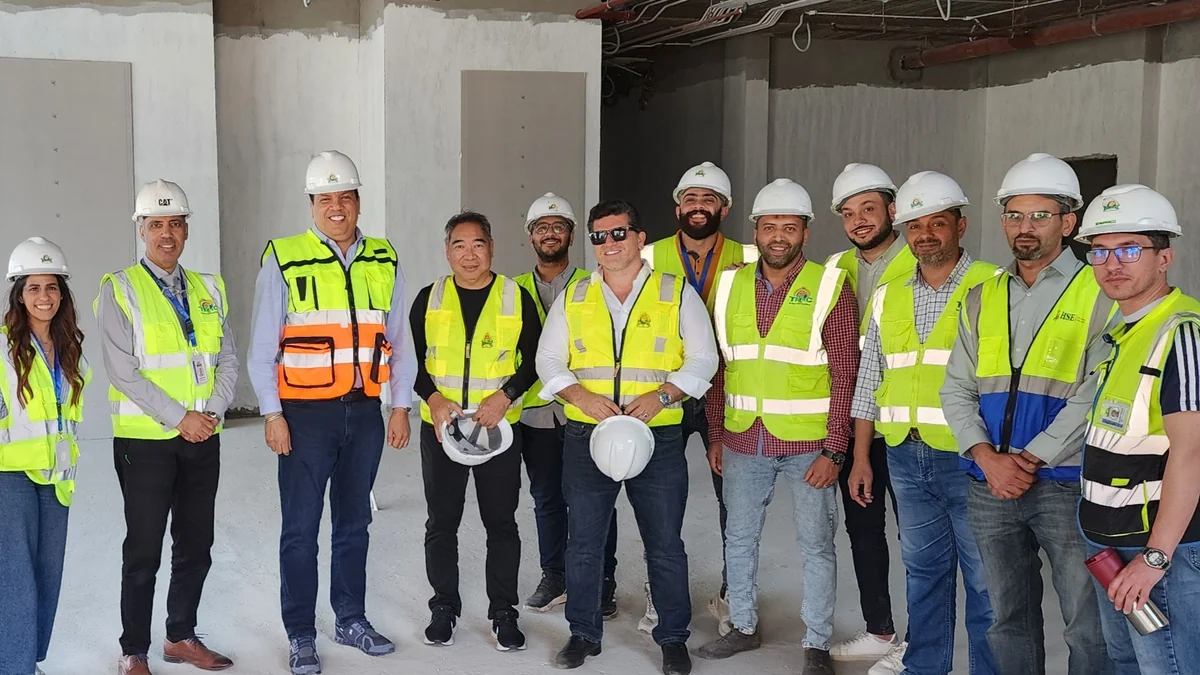
That means I have sat in the investment room where the expansion decision is made, inspected numerous cold, warm, and shell facilities, hired dozens of seed and alpha teams, dealt with fit-out and construction companies, walked the production floors where ramps stall, disputed with regulatory bodies, celebrated numerous first incoming call moments and inaugurations, and stood in front of leadership teams when an operation's risk profile becomes visible in the numbers.
A multinational asked us to move an operation of over 1,000 seats into North Africa with an expected structural cost reduction of more than 30% in year one. The strategy document alone was not enough.
What changed the outcome was:
- Designing a hybrid model between captive operations and a local hosting partner, keeping critical control inside while anchoring scale flexibility and reducing revenue leakage in the partner.
- Redrawing the human and AI work mix so volume deflection did not erode regulatory compliance or customer experience.
- Re-engineering the local overhead and supervision structure, and hiring the right leadership pipeline to match talent dynamics in the country instead of transplanting imported structures at high cost.
- Working with trusted, proven suppliers for the build-out and support functions, such as transportation, catering, and security.
The result was not only hitting the cost reduction target on time and within budget. The operation maintained quality and compliance metrics above its original baseline, and when the client visited the site after go-live, they left visibly pleased with how smoothly the transition had gone.
What does the BPO selloff mean for Africa operators?
What This Moment Means
Large global players with local presence in Africa exist, but many of them were built on the same high-volume, high-overhead, low-complexity model now under pressure.
The current moment favours operators willing to run a structurally different cost curve and an execution model that treats control, compliance, and measurable results as non-negotiable.
The market is right to punish the old high-volume call center model. What it has not yet fully priced in is that a structurally stronger way of operating in this new reality already exists, and it is being built right now in Africa by people who have moved from analysis to execution and have invested in deep domain expertise, rather than falling into the “we can do it cheaper” spiral.
Let's Talk
If you are rethinking your operating footprint, your portfolio, or your BPO expansion strategy into Africa, and you do not need another report but an open conversation that makes clear where your current plan would break before the market finds it for you, let's talk. No slides, no pitch, just a practical discussion about where your current plan may break.
LGS (Langwieder Global Solutions) is an Operational Integrity Partner™ providing BPO and CX advisory with real execution across Africa, for operators, enterprises, governments and investors.